반찬 diaries.
Seoul 2025 in review.

I am really scared of being labelled as a Koreaboo.
Koreaboo is an all encompassing stamp on your forehead. It eclipses so much of who you are. It really doesn’t matter if you are in a run club, ceramicist, assistant to the stylist or allied-health professional; Koreaboos are a uniformed identity. Hangukphiles, unable to think independently. Humiliating stuff, for me.
My PR is at risk of this label. My hanguk-tendencies can be kept under wraps for now, but this was my third visit to South Korea. More than ever, I felt the Koreaboo community embrace me with their pristine pale arms, Musinsa cladded. I am thinking a lot about if I should just let the tide take me, and dive head first into Koreaboo-hood. Or do I resist a little more?
I can clutch at these Hills & Europa, Seong-su, Cupcake Club, Kockiri and Kompakt straws as much as I can, but I know what’s underneath. I know the lyrics to twice, I know my Olive Young faves, I know the soju drinking games. I could give a crack at the gnarly routine if I wanted to. The cringiest amongst us are the most free, so maybe the K-life could be my liberation.
In the interim of this self reflection, there is at least one K-business I can stand on; Seoul’s dining/food scene.
Seoul’s food scene is a culture obsessed with itself. Taking cues from tradition and domestic trends only, dis-interested in anything non-Korean. Every time I visit, there is always an emerging trend or cooking style that shows face, always within the borders of Korean style. This time around, Sesame oil rotisserie chicken stuffed with rice and Toomba ramen rose to the top. Of course, Korea is always looking inward, bringing the boundaries of what you can and can’t eat in Seoul pretty tight. Yet, this provides so much opportunity to dive deeper and deeper into the cuisine. Forcing it’s visitors to try the b-sides to Korean cooking, beyond what is already known to you overseas. Once you get that first KBBQ out of the way, doors open to foods you would have never tried otherwise. Fuck your ChickenV dreams cuz, you need to get acquainted with Ginseng.
Below is a non-comprehensive list of food we ate in Seoul, 2025. Take this listicle as flags for your own journey and not a playbook. The standard of cookery in Seoul is so astronomical, it’s really hard to make a side step when selecting somewhere to eat. I implore you to choose your own journey, and stumble across your own venues. Nine out of ten spots will hit, trust and believe.
Bibim-naengmyeon with raw shredded beef, ₩19,000.
안동실비, Seogyo-dong.
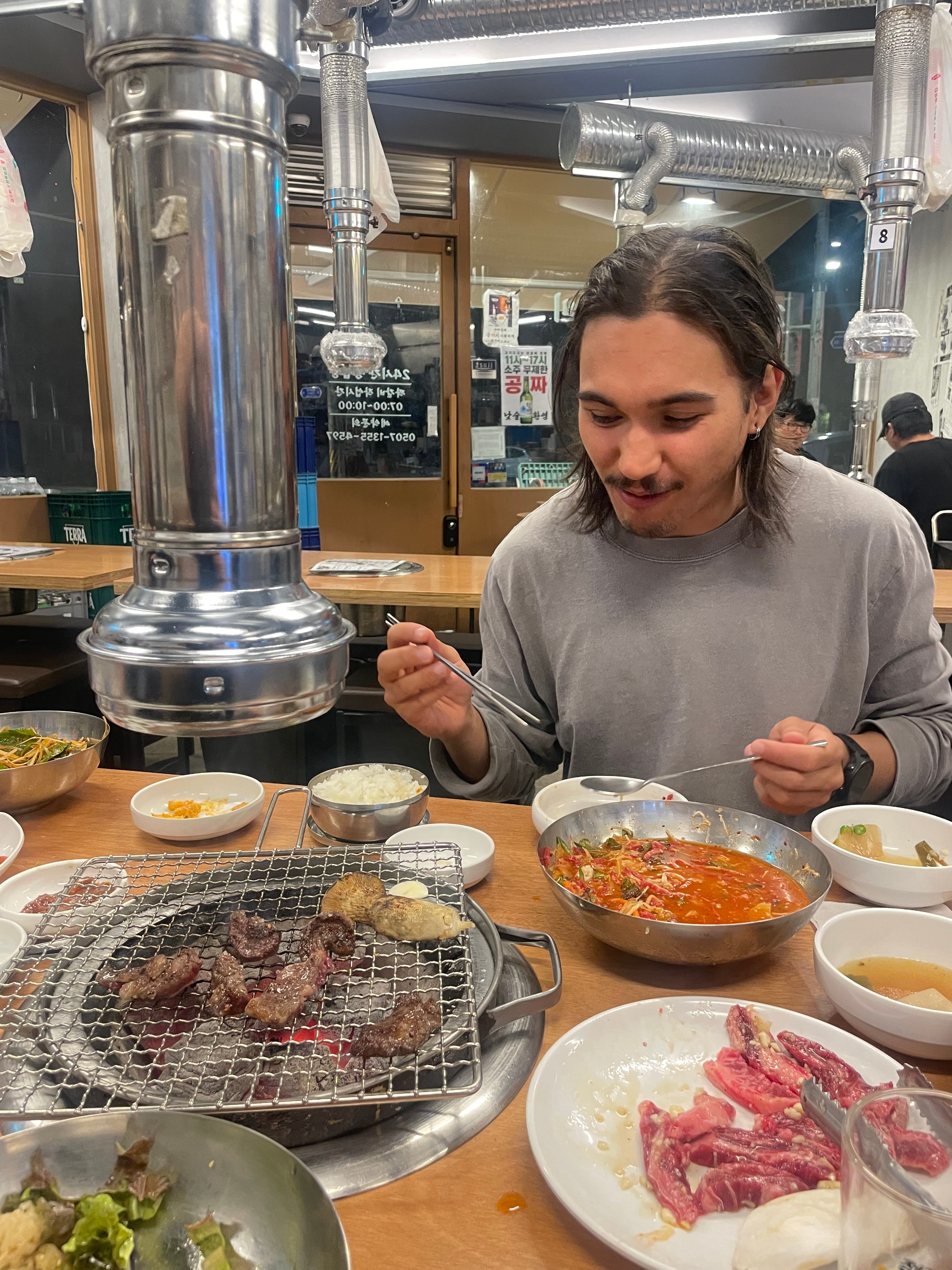
This was our touch down meal. I find the idea of a touch down meal really funny; the first thing you eat after that eight hour flight. Usually function over flavour, super random and at an obscene time of day. This meal was my first ever perfect touch down meal.
Bibim-naengmyeon is a spicy, gochujang blushed version of Naengmyeon, a frosty cold broth with noodles, vegetables and meats. Naengmyeon is known for it’s well balanced sweet, salty and umami broth served at just above freezing. This particular version stained its broth with kim-chi and gochujang, lifting the spice just enough to dance on those frosty cold notes. Really cool shit.
The stand out of this Bibim-naengmyeon was 220g of finely shredded raw beef, plunged into the ice cold broth. Raw beef (tartare-ish) is really popular dish in Seoul, but is usually just dressed with sesame oil and salt, plated. This was the first time I had had raw steak in a broth, bringing out new cooling flavours to the meat. Kudos to this random 24hr Pocha, you guys really put your foot into this.
Muscat Grapes, ₩9,500.
Fruit market near Kompakt Record Bar, Seong-su.
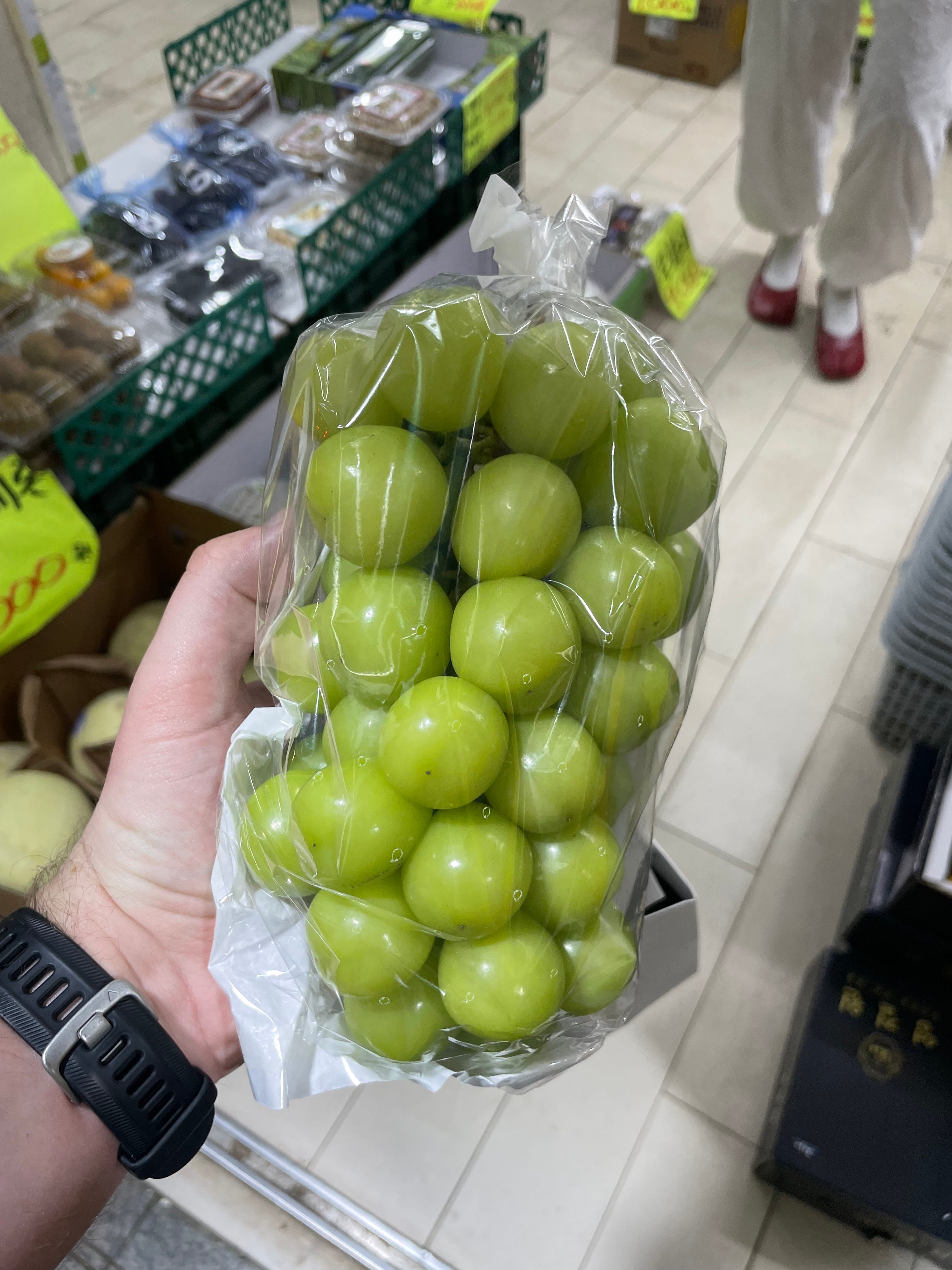
Muscat Grapes have exploded in popularity since my last visit. They really blew this bitch up. Every store, every block, everywhere. Melon kind of got the chop.
Most of their appeal surely lies in aesthetics alone. Plump, cartoonish grapes looking like balloons. It’s sort of ridiculous. The flavour is pretty standard issue green grape, but a good bunch gives you some extra crunch than usual. Nothing to phone home about, other than how they look.
Mul-naengmyeon with anchovy broth, peanuts and chicken, ₩7,000.
미정국수 0410 (various locations), Gangnam.
I was starting to ask myself all kinds of Gwyneth Paltrow related questions in Gangnam. Where would she get her facial done? Would she catch the metro? What bar is she going to?
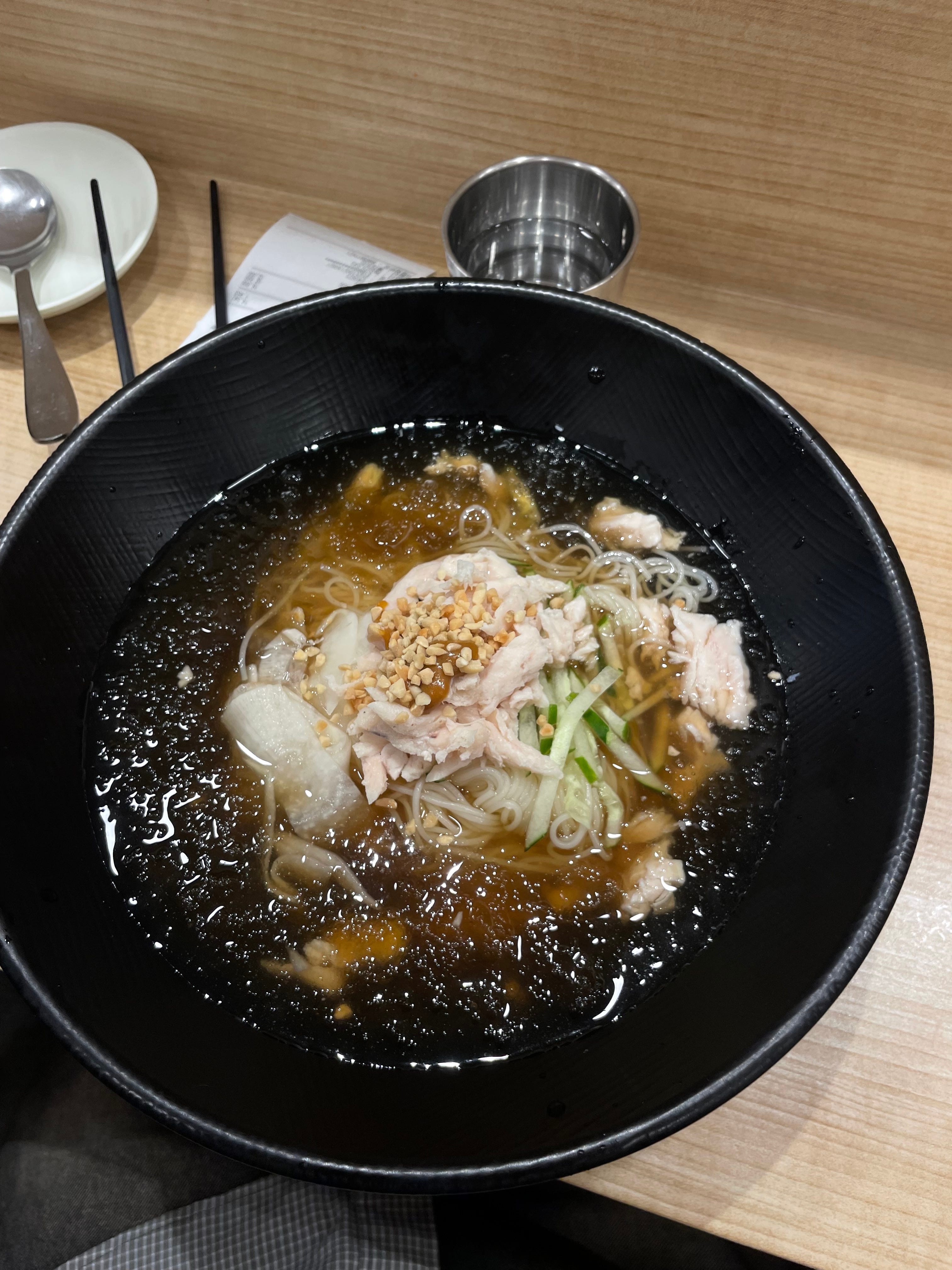
The answer to what would she eat? it’s definitely a Mul-naengmyeon from 미정국수 0410.
Just down the road from Lienjang Gangnam (the clinic), this hole-in-the-wall Naengmyeon place delivered the best quality cold noodle I have had in my life.
The anchovy broth, a perfect balance between salt, umami and sweet, was kept at a perfect negative two degrees. This keeps the broth a frosty like a slushie. Topped with poached chicken, boiled peanuts and pickles. I could literally see Gwynny across from me, head down into the bowl, non-verbal.
We got our faces injected like twenty minutes later.
Garlic Jokbal set, ₩43,000.
Myth-Jokbal Hongdae Branch, Mapo-gu.
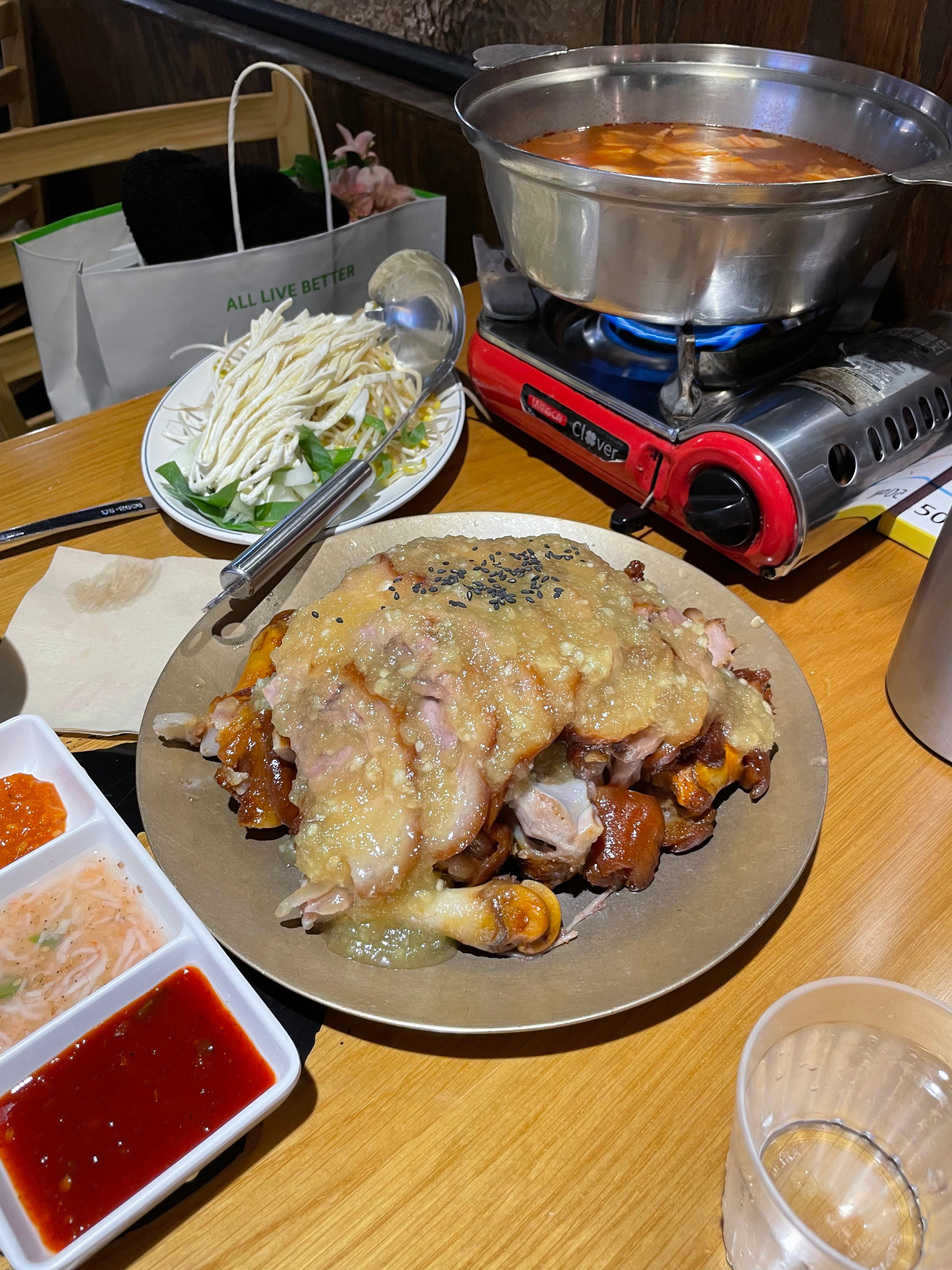
Koreans love any food that can double time as medicine, even if it’s a stretch. This is a stretch, but I buy it anyway.
Jokbal is a combination of pork trotter, hock and shanks that have been braised in a seasoned broth for a minimum of twelve hours. This length ensures a super tender meat, complimented with a good extraction of keratin and collagen from the bone. Topped with fermented garlic, accompanied with seasoned poaching liquid and paired with eleven different banchan. I love to eat medicine bro.
Mandu and Kalguksu, ₩24,000.
Myeongdong Kyoja Main Restaurant, Myeongdong Jung.
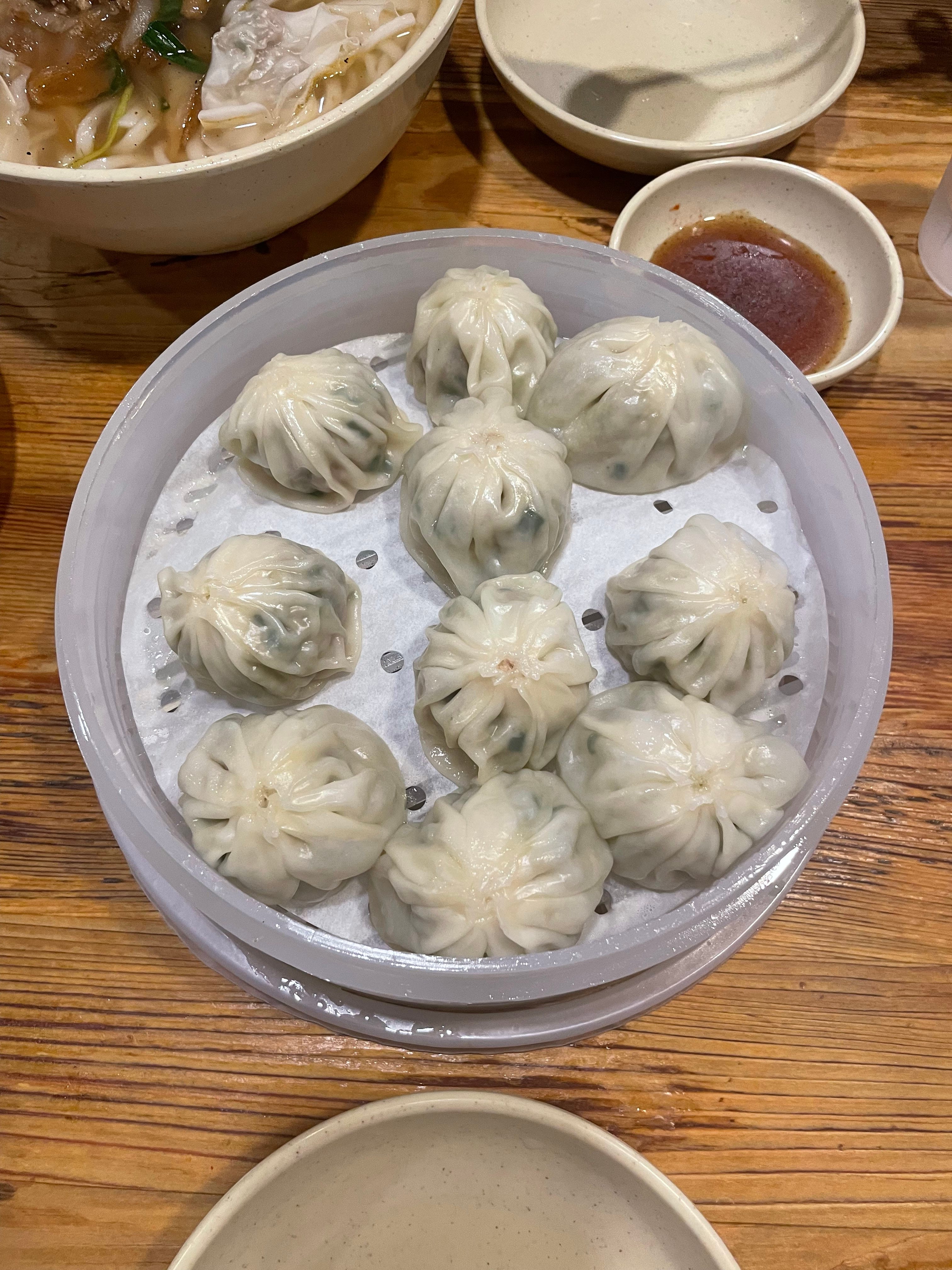
Korean food in Sydney plays the same few notes over and over again. Spicy, cheesy, deep fried, and kim-chi somewhere in there. Tip of the K-iceberg, you need to look further.
Some of Korea’s best flavours are the subtle, subdued and clean. I think Australia is so obsessed with these fun party foods that Korea has to offer, we ignore things that are a little cleaner and focused.
Myeongdong Kyoja is exactly that. The Mandu keeps it’s flavour tight; spring onion, ginger, garlic, sesame oil, white pepper, pork, garlic chive. No where to hide in the lineup, but each aromatic sings perfectly. Martha Stewart type beat here, perfectly perfect.
Their main-dish is the Kalguksu, cold noodles with a gochujang and cucumber dressing. The focus here is on texture, achieving the perfect chew on thin noodles.
I can’t talk this place up more. Technique and tradition is a cornerstone of Korean cooking, and it really shows at Myeongdong Kyoja. Masters of what they do.
Salt Bread, Jayeondo Sogeumppang, Seong-su.
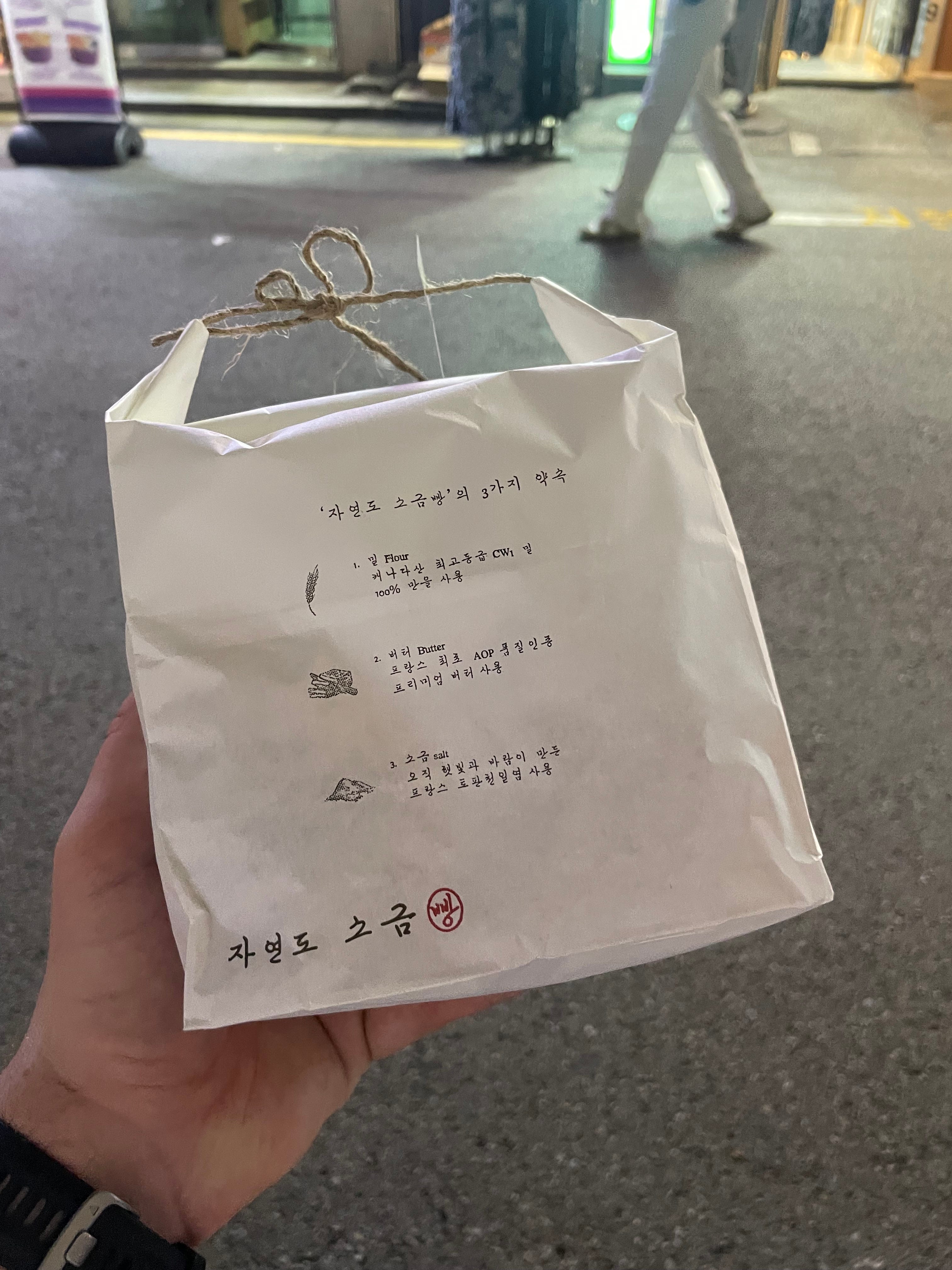
Somewhere between a croissant and a Costco dinner roll, Jayeondo Sogeumppang is the most popular place to get Salt Bread in Seoul. Perfectly baked, seasoned with salt directly from Paris. Assumably brought over from Paris by my good friend Lynn in his 36kg suitcase.
Salt Bread has been on the trend radar for two years now, and it doesn’t look like it’s letting up anytime soon. It’s pretty straight forward, sort of apexes the universal love for buttered bread. Buttery, topped with flaky salt, slightly sweet. I hope it stays on trend a little longer, I’m into it.
Silkie (black chicken) Samgyetang, ₩19,000.
Baekje Samgyetang 백제삼계탕, Myeongdong Jung.
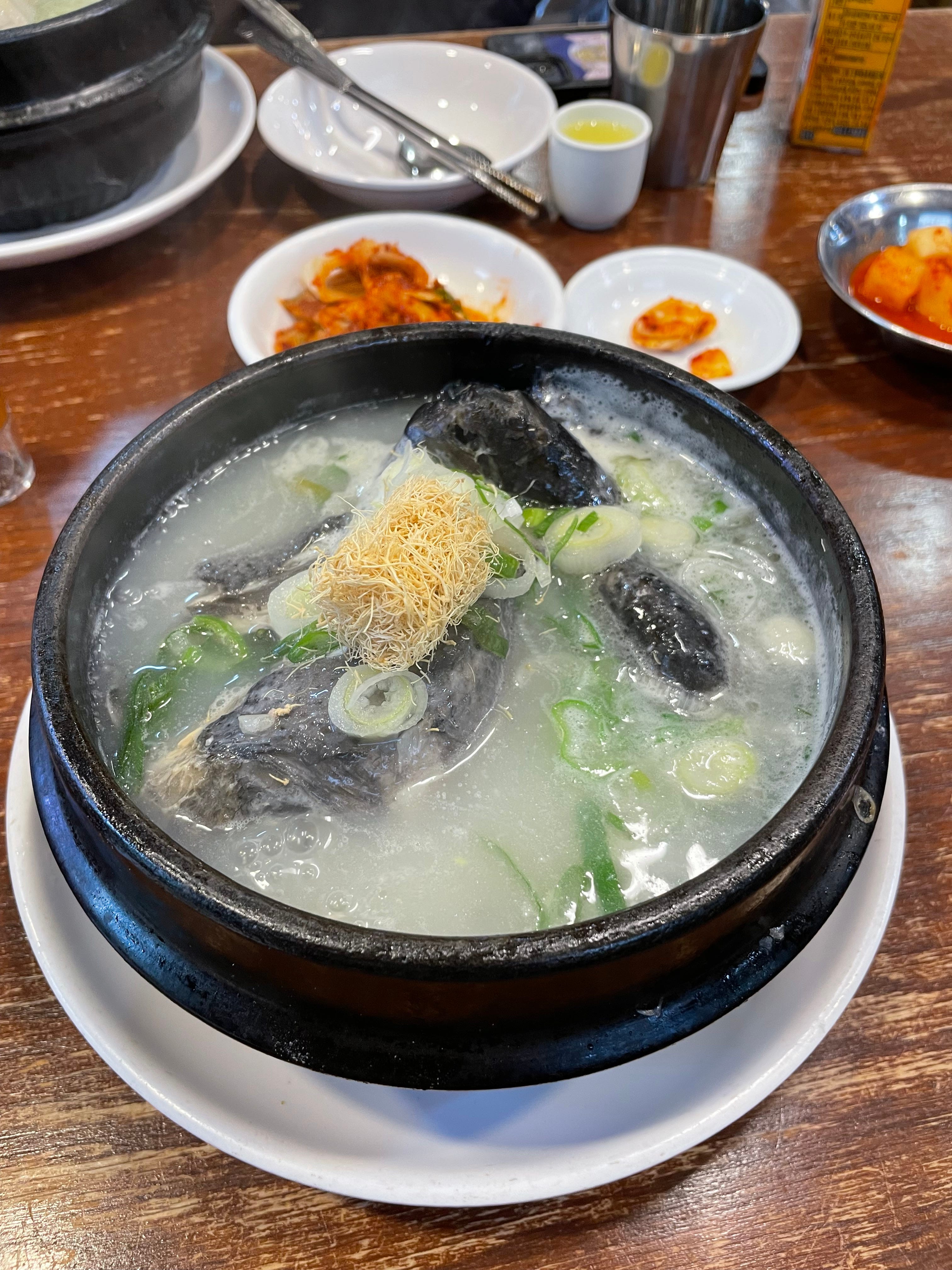
One of my favourite things to do in Korea is to absolutely write myself off beyond repair. Soju, Cass, a cocktail called the so-Julia. Fifteen different wristbands on my arm, waking up with find-my-friends firmly switched off. I love it, so much.
Following logically, this usually results in a record-breaking headache. Herein lies my Seoul hangover cure;
Text Kristian and ask where he is.
Throw up.
Get the largest Pocari Sweat that they have at the store.
Throw up.
Digital forensics on my new Instagram followers.
Google ‘remove nightclub stamps from skin quickly’.
Google ‘IV drip service under 80,000 won Itaewon’.
Throw in the towel.
Silkie Chicken Samgyetang.
Jeon, ₩2,300-4,000.
Mangwon Food Market, Mangwon-dong.
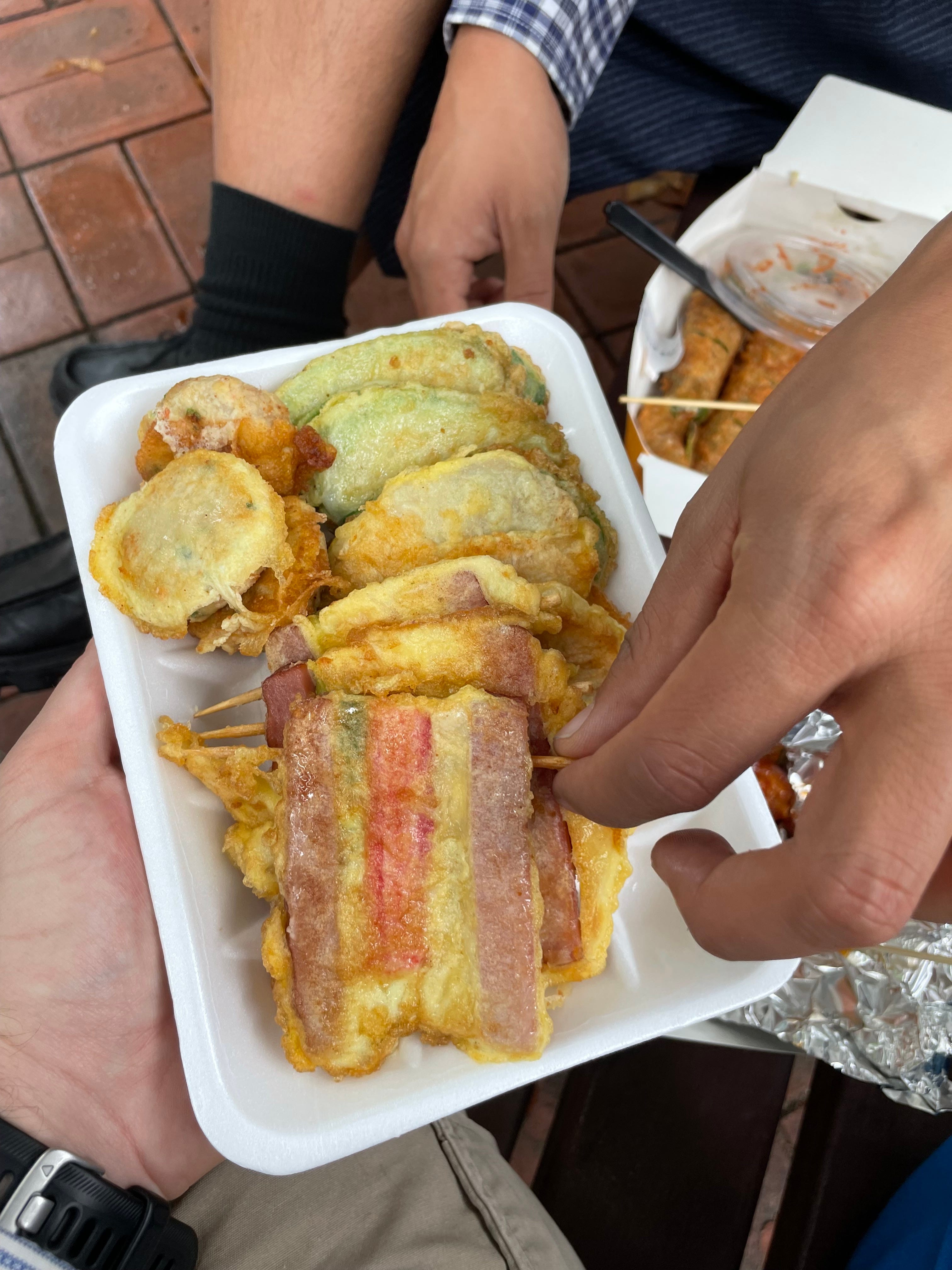
Mangwon market is a new addition after I passionately abandoned Gwangjang market. Mangwon has more touches of fruit, veg, fish and meat; feeling way less plastic. Gwangjang got hit by the tiktok tidal wave and the food quality is on the floor. Chop city over there.
Mangwon is the place to try kim-chi varietals you’ve never had before; silk pupae, garlic shoots, whole cucumbers and tomato to name a few. Mangwon market is famous for their Jeon, a variety of meat, veg and herbs fried like a fritter. The classic is a trio of seafood extender, spam and spring onion in a Minecraft block. Heavy suggest. Keep your eyes peeled for the pork stuffed bull horn chillies, tiny crabs, and perilla leave Jeon.
King Crab, ₩110,000-120,000/kg.
Noryangjin Fisheries Wholesale Market, Dongjak.
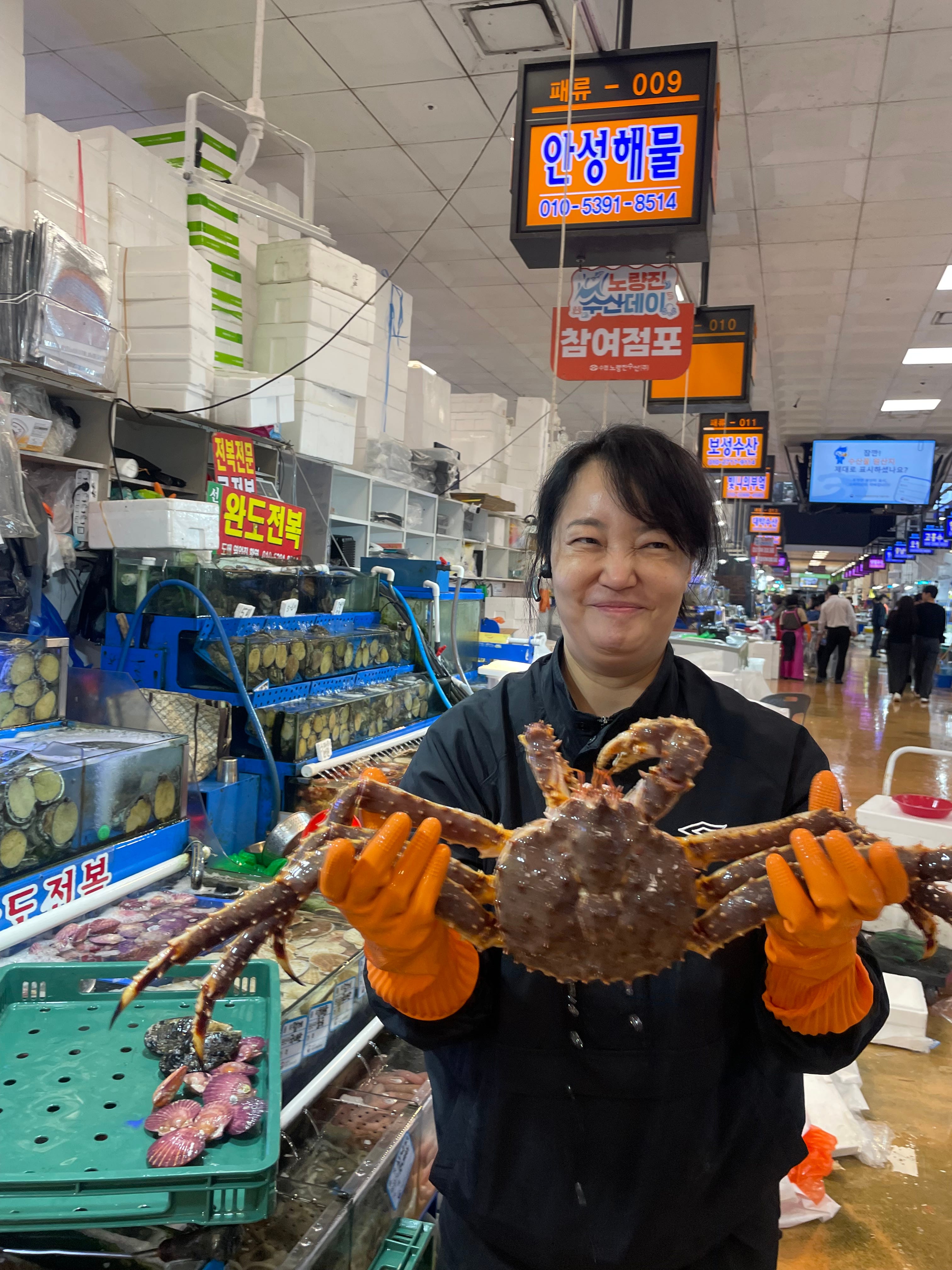
Noryangjin markets seems to be the only place in the whole fucking city that closes before 9:00pm. My fried Sydney brain should have been fine with this, but the Seoul body clock marks dinner at anytime from 10:00pm-2:00am. Be prepared for this to be lunch or something similar.
About twenty minutes away from Honggik Univ., Noryangjin is the place to be if you want to try the best of Korean seafood. Raw fermented crab, abalone, 회무침 (similar to Sashimi, but eaten with ssam). Save your coins for a trip to the seafood market, as this is probably the cheapest place on earth to try a King Crab (pulling in $130-180 for a 2.5kg crab). Make sure to mention to whoever is selling your crab that you want to eat it there, before they literally hand you a live king crab.
Yonsei Fresh Milk Bun, ₩2,900.
Various Locations, 7/11.
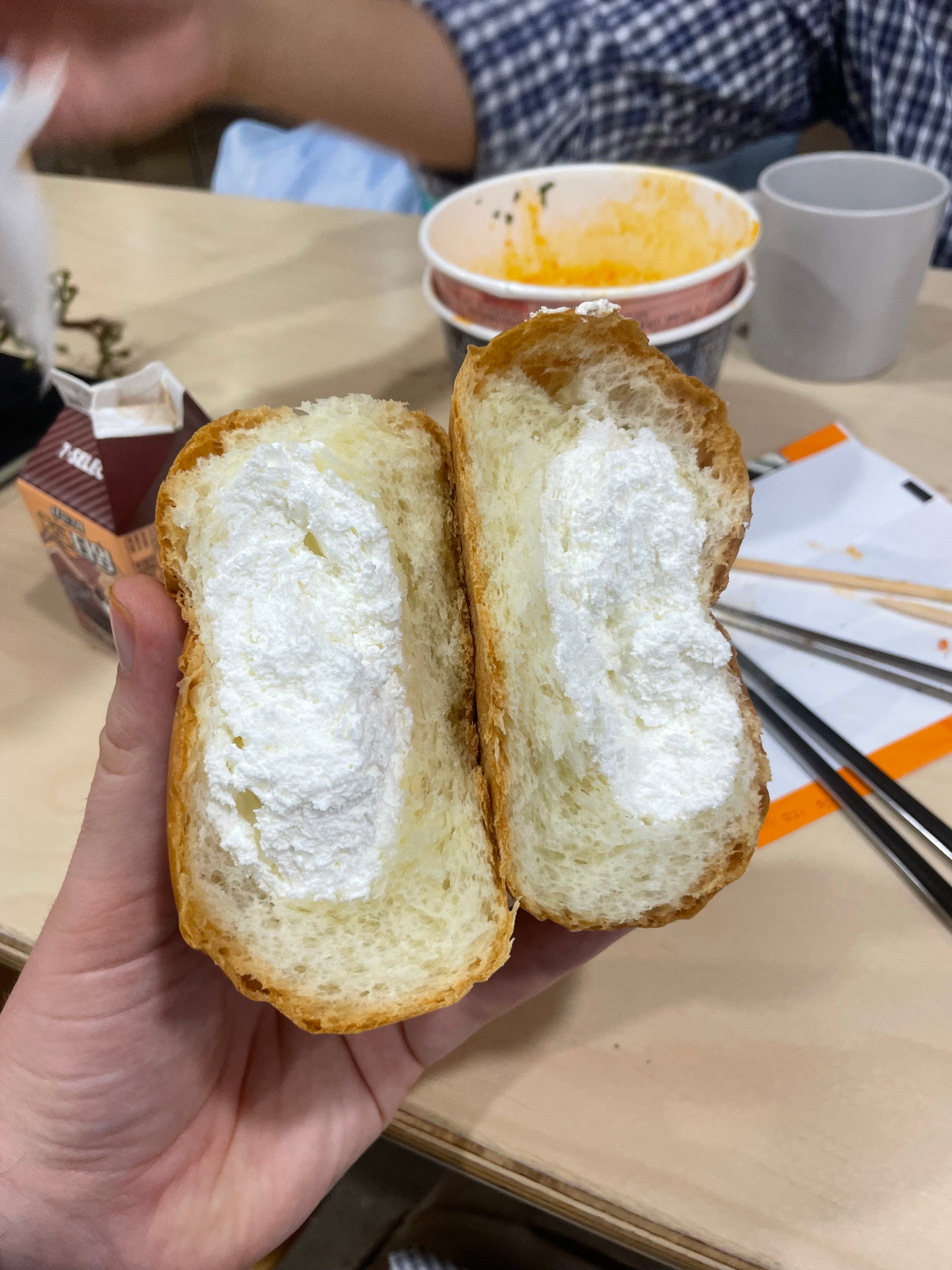
No east-Asia trip can occur without some form of convenience store romanticisation. This iteration, 7/11 is all about the cream bun.
These hefty milk-buns are filled to the brim with milk-cream, almost a bit obscene. I need one more moment with these bad boys, in a room of which there are no others.
Probably see you next year Seoul, lol.
Lemme coming next year
Now why am i in it